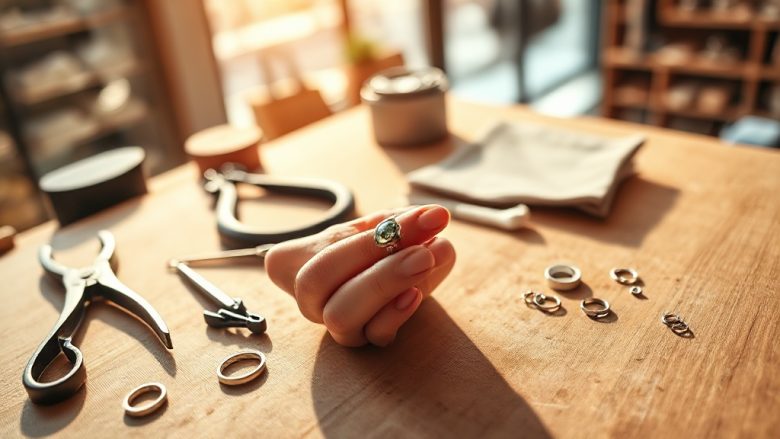
Two handmade rings can sit in the same display case at the same price and still differ enormously in how long they will last. One may still look right in ten years; the other may lose a stone, catch on clothing, or wear through its plating within a season. The difference is rarely hidden. It shows up in the materials, the joins, the finish, and the honesty of the price. This is the expert advice on handmade jewelry I give most often: learn where to look, and you can judge a piece in your hand in a few minutes.
Handmade means a person made decisions. Those decisions are either careful or rushed, and the object carries the evidence. Below is how to read it, section by section, whether you are buying online or from a market stall.
Start With the Materials, Because They Set the Ceiling
No amount of skill rescues poor material. A beautifully soldered join in base metal will still tarnish; a flawless setting around a soft, fracture-filled stone will still fail. So the first question is never “is it pretty?” but “what is it made of?”
Look for a clear statement of metal and stone. Solid sterling silver, solid gold, and solid gold fill are the durable options. Plated brass and “gold tone” are fine for occasional wear but will eventually wear through at the high points, usually the edges of a band or the tips of a setting. If a maker can’t tell you the base metal under the plating, that’s a signal, not a mystery to solve.
With stones, ask whether they are natural, lab-grown, or treated. None of those is automatically wrong, but they carry very different values and very different care needs. A natural opal, for instance, is sensitive to heat and impact; a treated turquoise may discolor with oils. Knowing what you’re buying lets you judge whether the price fits. It also tells you whether the piece suits your daily life.
Inspect the Joins and Settings Like a Maker Would
Joins are where handmade jewelry lives or dies. Run a fingertip along every seam. A good solder joint is smooth, filled, and continuous. A poor one is lumpy, pitted, or has a hairline gap you can see when you tilt the piece toward a light. Gaps trap moisture and soap, which leads to corrosion and, eventually, a broken piece.
On rings, check where the band meets the setting. On chains, check every link and the clasp. Pull gently. A jump ring that was simply closed, rather than soldered, will open under normal wear. That’s a two-minute fix for a maker and a lost pendant for you.
Settings deserve the same scrutiny. Prongs should sit evenly over the stone, with no sharp edges ready to snag a sweater. Bezel settings, where metal wraps the stone’s edge, should be smooth and flush. If a stone rattles when you shake the piece gently, the setting is loose. If you can see a gap between the stone and its seat, the stone was set into a poorly cut seat, and it will move.
One more check: look at the back of the piece. Beginners finish the front and hide the mess behind. Experienced makers finish both sides, because they know the back is what touches skin and clothing.
Judge the Finish and the Weight in Your Hand
Finish is the last thing done and the first thing noticed. A good polish is even, with no swirl marks, no dull patches, and no leftover file scratches. Hold the piece at an angle to a window or lamp. Reflections should be clean and unbroken. If the light scatters, the surface wasn’t taken through the finer grits.
Weight matters more than most shoppers expect. A well-made piece feels solid without feeling clumsy. If a bracelet feels light for its size, the metal may be hollow or thin, which dents easily and can’t be repaired well. If it feels uncomfortably heavy, it may be uncomfortable to wear all day. The right weight is the one you forget you’re wearing.
Also check the moving parts: clasps, hinges, ear wires, and any articulated sections. They should move smoothly and return to position without sticking. A stiff hinge will loosen; a loose one will fall apart. Both are avoidable with careful assembly.
Texture counts too. Hammered surfaces should look deliberate, with consistent marks. If the texture is uneven in a way that looks accidental, it probably was.
Understand What Fair Pricing Actually Means
Handmade pricing confuses people because it isn’t retail pricing. A handmade piece includes the maker’s time, their skill, the materials, and the overhead of a small workshop. That’s why a simple silver band can cost more than a mass-produced ring with a bigger stone. You’re paying for decisions, not just materials.
Fair pricing is transparent. A maker should be able to tell you roughly why a piece costs what it does: the metal weight, the stone, the hours, the finish. If the number feels high, ask what’s in it. If the answer is vague, the price may be aspirational rather than earned.
Be wary of the opposite too. Extremely cheap handmade jewelry usually means thin metal, plated findings, or rushed work. Someone cut a corner, and it will show up in wear. The goal isn’t to buy cheaply. It’s to buy well, which often means paying once for something that lasts rather than three times for something that doesn’t.
Custom work changes the math. A one-off design takes more time than a repeatable one, and the maker may need to source a specific stone. Expect a fair custom price to reflect that, and expect a deposit to be normal and reasonable.
Questions Worth Asking Any Maker Before You Buy
Good makers welcome questions. They’d rather you understand the piece than be disappointed later. If a maker is evasive, that’s information too.
Ask what the metal is, precisely, and whether it is solid or plated. Ask how the stones are set and whether they are natural, lab-grown, or treated. Ask how the piece should be cleaned and what it shouldn’t touch, because handmade jewelry often needs gentler care than mass-produced pieces. Ask whether the maker repairs their own work, and what that costs. A maker who stands behind their pieces will usually say yes.
If you’re buying online, ask for close-up photos of the joins and the back of the piece. A maker who has nothing to hide will send them. If you’re buying in person, hold the piece, turn it over, and look at it in daylight. Your hands will notice things your eyes miss.
One short list is worth keeping in mind for the questions: metal type, stone type and treatment, setting method, care instructions, and repair policy. Five answers tell you most of what you need to know.
The Bottom Line on Buying Handmade Jewelry Well
Handmade jewelry rewards attention. The pieces that last are the ones where the maker thought about the material, the join, the setting, the finish, and the weight, and priced the work honestly. You don’t need a jeweler’s loupe to see most of it. You need a few minutes, good light, and the willingness to turn the piece over.
Buy the piece you can inspect, understand, and care for. Ask the questions. Trust the answers you can verify with your own hands. Do that, and the handmade jewelry you choose will still be worth wearing long after the cheaper alternative has been quietly retired to a drawer.